Posts

Archaeology Ireland 26.1 (Issue 99) Spring 2012: Review

Image
[** If you think the review is useful, please re-share via Facebook, Google+, Twitter etc. **] Spring i s here and so too is the new edition of Archaeology Ireland magazine! As I have recently taken to providing a slightly annotated contents list of the magazine, I thought I’d put together a few notes on what’s inside. In the first major paper in the current edition, Liam Downey, Connie Murphy & Tadhg O'Keefe report on A possible 'Celtic' icon on the Beara Peninsula . This is recently rediscovered stone from the townland of Billeragh, Co. Cork. While it appears to have disappeared from view in recent years, it was known to a number of the older residents as 'Pete Micheál's god'. The writers describe it as an anthropomorphic figure sitting on folded legs and compare it to various examples of ‘Celtic’ stone idols from across the island, as well as phallus-like stones, such as the Lia Fáil at Tara, Co. Meath. While there is a local folkloric contex...

Scatter matters: Bayesian statistical modelling and evidence for overlap between late Mesolithic and early Neolithic material culture in England by Seren Griffiths (University of Cardiff): Review

Image
[**  If you like this post, please make a donation to the IR&DD project using the button at the end.  If you think the review is useful, please re-share via Facebook, Google+, Twitter etc. **] Preface: I am very happy to introduce our third guest writer, Rena Maguire, to the blog. Rena is an undergraduate student at QUB, in her second year. She is currently working on her undergraduate thesis: Iron Age horse harness Y pieces: function, manufacture and typologies. Robert M Chapple Being an archaeology and paleoecology undergraduate in QUB Belfast has perks, one of the best being the PCC Lunchtime Seminars organised by our department. I’ve personally found them invaluable to gain insights into sometimes quite obscure areas of archaeology. The guest lecturers are, as one would expect, at the cutting edge of their respective fields. Not least of these is Dr Seren Griffiths of the University of Cardiff , who gave a talk (March 20 2012) on Scatter Matters: ...

Head Carrying in Medieval Wexford and Modern Galway

Image
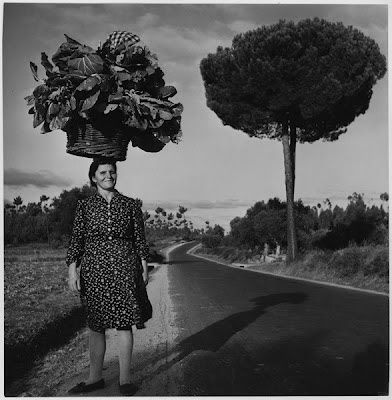
[**   If you like this post, please make a donation to the IR&DD project using the button at the end.  If you like this post, please consider re-sharing this post via Facebook, Google+, Twitter etc.**] In my review of Anne Lynch’s recent publication Tintern Abbey, Co. Wexford: Cistercians and Colcloughs. Excavations 1982-2007 I touched on the finding that some of the women buried at the Abbey may have routinely carried heavy loads perched on their heads. To be specific, O’Donnabhain (2010, 116) notes that among the sexed females from the site, there was a marked increase in the rate of osteophytosis in the neck than among the males. He notes that this observation correlates with an elevated rate of arthritis of the cervical vertebrae. Taken together, it is postulated that these conditions are evidence for the routine carrying of loads on the head. No published references are cited in support of this thesis. Similarly, no parallels are drawn with any comparable e...

St. Patrick’s Gravestone: A Bigger fake!

Image
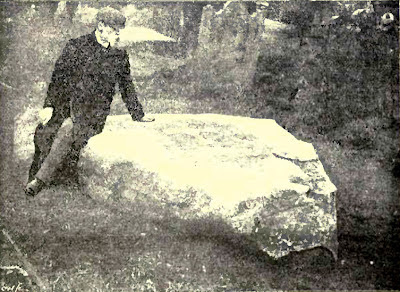
[**  If you like this post, please make a donation to the IR&DD project using the button at the end.  If you think the post is useful, please re-share via Facebook, Google+, Twitter etc. **] St. Patrick's gravestone in 1900 I hadn’t intended to write anything for this blog specifically about St. Patrick or St. Patrick’s Day . However, I happened to read the rather excellent post about the death and burial of ‘Ireland’s Patron Saint’ by Cultural Heritage Ireland [ Facebook Page | Twitter ]. The post quotes the Annals of Ulster and the Annals of the Four Masters’ account of the death, burial, and battle over the body of Patrick, followed by its eventual burial at Dun-da-leth-glas (Fortress of the Two Broken Fetters), modern Downpatrick . It is well worth a read ! The post even includes a photograph of St. Patrick’s grave. Specifically, it is the photograph of the grave that prompted me to write, as it reminded me of my own first encounter with the Saint on hi...