Posts

Blogging and Archaeology – please help a researcher!

Image
Part of a Google Image Search for 'Chapple Archaeology Blog' ( Source ) I’ve recently been contacted by Fleur Schinning , a post-graduate student in Heritage Management at Leiden University in the Netherlands. Her research focuses on the use of blogs and social media and how they contribute to the accessibility of archaeology in the Netherlands. For comparative material, she will be looking at a number of blogs from the UK and the USA (where archaeological blogging appears to be widely accepted). I’m honoured that she has asked me, and the readers of this blog, to participate in her research. If you can spare even a few minutes, she would be very grateful if you could complete a simple questionnaire to share your thoughts about this blog. Here:  http://goo.gl/forms/z3BAUTyYUL As a reward for your assistance, you will be entered into a draw for six issues of ArchaeologyMagazine . Many thanks, Robert PS - a number of fellow bloggers are also participating i...

‘and the war came’: Visualising the human costs of the American Civil War (1861-1865)

Image
[Don't want to read my waffle & just want to get to the Viz? You'll find it here  or you can just scroll to the end of this post] Some time ago I completed a vizualisation of the human expenditure in the First World War (1914-1918) . It was a pretty satisfying experience that allowed me to deepen and broaden my own understanding of the period and the finished product will, I hope, allow others to do the same. I was casting about for another similar undertaking, both as a means of enhance my skills with the Tableau application and act as a training platform before I undertook a larger data vizualisation project based on my IR&DD Catalogue of Irish radiocarbon dates (operational Functional Test available: here ). Over the last while, my long dormant interest in the American Civil War has been revived and revitalised by a Damian Shiels’ rather wonderful work   on the Irish involvement in the conflict [ Blog | Facebook | Book ]. As the blurb on his book states, with...

The Floral Hall, Belfast Zoo | A dilapidated gem

Image
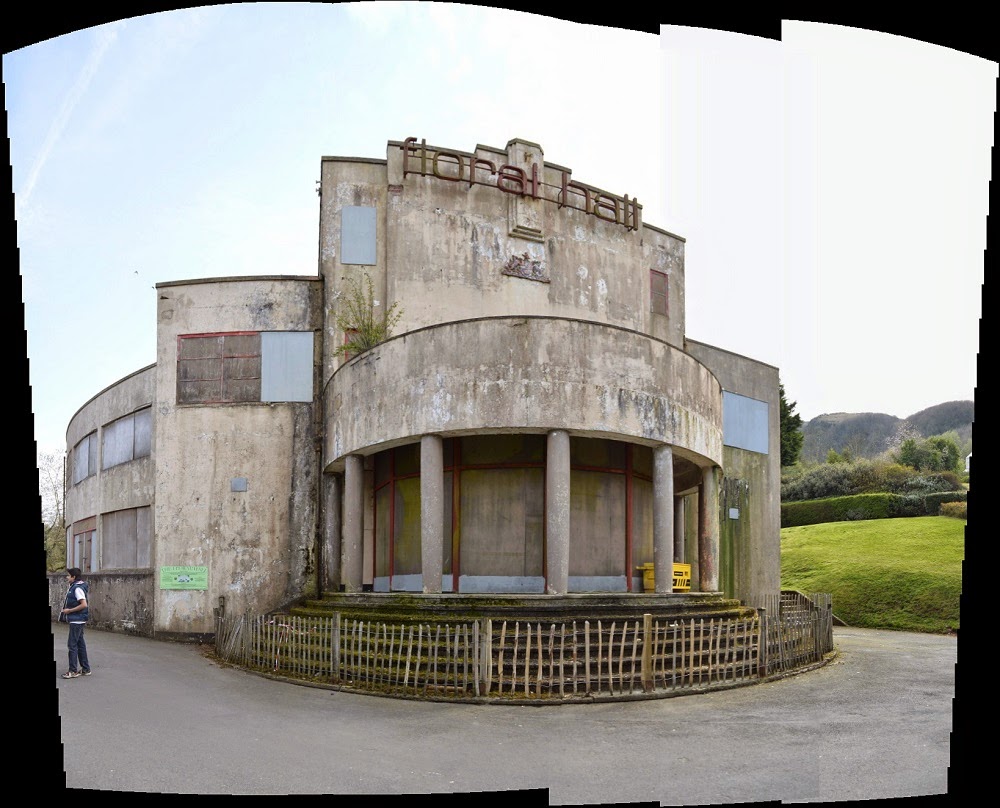
[** If you like this post, please make a donation to the IR&DD project using the secure button at the right. If you think it is interesting or useful, please re-share via Facebook, Google+, Twitter etc. To help keep the site in operation, please use the Amazon search portal at the right - each purchase earns a small amount of advertising revenue **] < 3D images As regular readers of this blog will be aware, I have young children: The Chapples Minor. On the basis that parenting has a multitude of expectations and responsibilities, I occasionally, and somewhat reluctantly, make the excursion into the north of the city to the Belfast Zoological Gardens. I’m afraid I’m not particularly keen on Zoos (sorry … I’m probably broken internally, but that’s just how it is!), but I do enjoy going there to see a rather amazing, if terribly dilapidated, jewel of Art Deco architecture: the Floral Hall. The history of the site goes back to 1911, when Belfast Corporation took ov...

The Floral Hall, Belfast Zoo | 3D images

Image
< Back to main post Here are a couple more of my early experiments with creating 3D (anaglyph) photographs. Information on glasses and other 3D images in this blog may be found here . Click for larger images. < Back to main post

Excavation from high above

Image
I recently reread a post by Colm Moriarty of irisharchaeology.ie [ Facebook | Blog | Shop ] that reminded me of something I wanted to share. He put together a simply beautiful post of Aerial Views of Ireland’s Ancient Royal Sites – go on, have a look & come back when you’re ready! ... I'll wait ... Anyway … A little while ago, for no particularly good reason, I was scanning over central and east Belfast using both Google and Bing maps. Although not visible on the current Google aerial map, the Bing map showed an abandoned ( i.e. not backfilled) portion of the archaeological excavation of the Sirocco Works, an 18th to 20th century glassworks on the banks of the River Lagan. I was involved in a very early stage of the archaeological work there, spending endless, tedious hours watching the removal of turbine sheds and concrete flooring on the site. This was followed up by an excavation of the western portion of the site ( brief report here ). The lot I was...

Stonehenge Virtual Reality tour! It’s Super Awesome!

Image
When you put ‘solstice’ and ‘archaeology’ together in the same sentence, most people immediately think of that jewel of the Salisbury plain: Stonehenge. Throughout its long and varied career and multiple incarnations, the site has probably never been a quiet place at the solstice. Today, with competing claims for access from a variety of groups, including archaeologists, neo-pagans, neo-druids, and their assorted neophytes, you would be hard pressed to get within touching distance of the stones. With some 20,000 people expected this year , your chances of even seeing the solstice sunrise are limited, don’t mind finding any form of personal enlightenment or inner peace … or whatever you might journey there to seek. For the rest of the year, the stones are distinctly off limits to almost everyone. Unless you’re Gandalf or a high-ranking archaeologist with a superb research design your chances of getting close to those famous stones is vanishingly remote. End of story. Except … no...

Archaeology in Social Media | Academia.edu Chronicles 04

Image
Ready for another quick sprint through the wild world of freely available PDF papers on Irish archaeology (and related goings on)? Of course you are! Here are my latest picks: Philip Macdonald: Geophysical Survey and Excavation at the Mound of Down, County Down 2012 Art J. Hughes: Late Old Irish lenition and the modern Gaelic Verb Peter J. Smith: Politics and Land in Early Ireland: A Poem by Eochaid Úa Flainn – Éitset áes ecna aíbind Iwan Wmffre: The Qualities and the Origins of The Welsh Vowel [ɨː] Grigory Bondarenko: Studies in Irish Mythology Benjamin W. Roberts & Miljana Radivojević: Invention as a Process: Pyrotechnologies in Early Societies Damian Shiels: Limerick and the American Civil War (PowerPoint Presentation) Aidan O’Sullivan & Tríona Nicholl: Early Medieval Settlement Enclosures In Ireland: Dwellings, Daily Life and Social Identity Aidan O'Sullivan: The Social and Ideological Role of Crannogs in Early Medieval Irela...